Introduction
Aquatic resources play a critical role in Africa’s food security, economic development, and environmental sustainability. With growing demand for protein, increasing pressure on natural resources, and changing climate conditions, sustainable fisheries and aquaculture have become essential pathways for building resilient food systems.
AquaVista Solutions supports the advancement of fisheries, aquaculture, and blue economy initiatives by providing technical expertise, strategic advisory, and innovative solutions that help organizations unlock the potential of aquatic resources.
The Growing Importance of Aquaculture in Africa
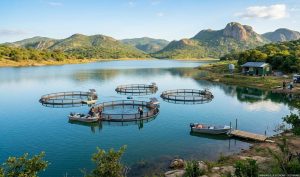
Aquaculture, the farming of fish and other aquatic organisms, has become one of the fastest-growing food production sectors globally. Across Africa, fish farming provides opportunities to improve nutrition, create employment, support rural communities, and strengthen local economies.
Unlike traditional capture fisheries, which depend on naturally occurring fish populations, aquaculture allows for controlled production through carefully managed systems. However, successful aquaculture requires proper planning, technical knowledge, efficient management, and sustainable practices.
Challenges such as poor farm design, inadequate feed strategies, limited technical capacity, and weak market planning can reduce productivity. This is why expert advisory support is essential when developing successful aquaculture enterprises.
Supporting Sustainable Fish Farming Development
At AquaVista Solutions, we help farmers, investors, and organizations develop efficient and profitable aquaculture systems.
Our approach considers every stage of the production cycle, including:
- Site assessment and suitability analysis
- Aquaculture system design
- Hatchery development
- Stocking strategies
- Fish health management
- Feed optimization
- Production improvement
- Farm expansion planning
By combining technical expertise with practical field experience, we help clients reduce risks and create sustainable fish production systems.
The Role of Fisheries Management in Protecting Aquatic Resources
Capture fisheries remain an important source of food and income for millions of people. Lakes, rivers, and reservoirs support communities, commercial activities, and local economies.
However, unsustainable fishing practices, environmental changes, and resource pressures can threaten long-term productivity.
Effective fisheries management helps maintain healthy aquatic ecosystems through:
- Fish stock assessments
- Sustainable harvesting frameworks
- Resource monitoring
- Restocking programs
- Community participation
- Policy development
AquaVista Solutions supports responsible fisheries management by combining scientific assessment with practical resource planning.
Using Technology to Improve Aquatic Decision-Making
Modern fisheries and aquaculture development increasingly depend on technology and data.
Tools such as Geographic Information Systems (GIS), remote sensing, and digital monitoring systems provide valuable information for planning and managing aquatic resources.
These technologies help identify:
- Suitable locations for aquaculture development
- Water resource opportunities
- Environmental risks
- Climate impacts
- Production potential
Through data-driven approaches, organizations can make better decisions, improve efficiency, and reduce investment risks.
Climate Change and the Need for Resilient Aquatic Systems
Climate change presents new challenges for fisheries and aquaculture, including changing rainfall patterns, water availability issues, and environmental risks.
Building climate-resilient aquatic systems requires innovative approaches that consider both productivity and sustainability.
Climate-smart solutions include:
- Improved water management
- Risk assessment
- Sustainable production methods
- Environmental monitoring
- Adaptive planning
AquaVista Solutions supports clients in developing aquatic systems that remain productive while responding to changing environmental conditions.
Investing in the Blue Economy
The blue economy represents the sustainable use of aquatic resources to create economic opportunities while protecting ecosystems.
Fisheries, aquaculture, water resources, and related industries have significant potential to support economic transformation across Africa.
However, successful investment requires proper planning, feasibility assessment, and technical evaluation.
AquaVista Solutions supports investors and organizations through:
- Technical feasibility studies
- Business planning
- Investment assessments
- Risk analysis
- Sustainability evaluations
Our goal is to help transform aquatic opportunities into viable and sustainable enterprises.
Building Capacity Through Knowledge and Training
Sustainable development depends on skilled people. Farmers, communities, institutions, and organizations require access to practical knowledge and technical training.
AquaVista Solutions provides capacity-building programs focused on:
- Aquaculture production
- Farm management
- Fisheries practices
- Hatchery operations
- Climate-smart systems
- Technical procedures
By strengthening skills and knowledge, we help create stronger aquatic value chains.
Conclusion
The future of fisheries and aquaculture depends on innovation, responsible management, and collaboration. As Africa continues to explore opportunities within the blue economy, sustainable aquatic systems will play an increasingly important role in food security, livelihoods, and economic development.
AquaVista Solutions is committed to supporting this transformation by delivering science-based advisory services, practical solutions, and strategic partnerships that create lasting impact across the aquatic sector.
Building sustainable aquatic systems for a resilient future.